Scott Kirby, CEO of United Airlines, has publicly confirmed what industry insiders have speculated about for months: he personally initiated talks with American Airlines about a possible merger. The revelation, made during a closed-door investor call and later confirmed in a public statement, sent shockwaves through the aviation sector. While the talks did not progress beyond initial discussions, the mere fact that the two largest U.S. carriers by fleet size and destinations considered unification raises urgent questions about the future of airline consolidation, competition, and consumer impact.
This isn’t the first time merger rumors have surfaced in the airline industry—far from it. But unlike past speculative whispers, this confirmation comes straight from the top. Kirby didn’t frame it as a strategic masterstroke, but as a logical question: “We asked, ‘Would a merger make sense for shareholders, customers, and employees?’ The answer, at least for now, was no.”
Still, the implications are profound.
Why United Considered a Merger with American
At first glance, United and American Airlines appear to be fierce competitors. They dominate key international routes, compete for corporate contracts, and vie for loyalty program supremacy. Yet both face mounting pressure from rising fuel costs, labor shortages, and the growing influence of low-cost carriers like Southwest and Frontier.
For United, a merger offered potential synergies:
- Route overlap rationalization: Eliminating redundant flights on routes like New York to Los Angeles or Chicago to Dallas could free up aircraft for more profitable international expansion.
- Hubs consolidation: With both airlines heavily invested in Chicago (ORD), Dallas (DFW), and Washington D.C. (DCA), combined operations could reduce fixed costs at airports and ground services.
- Loyalty program leverage: United’s MileagePlus and American’s AAdvantage are two of the most valuable travel rewards ecosystems. A unified program could rival credit card issuers in revenue generation.
In a fragmented industry where scale often determines survival, Kirby saw an opportunity to create a dominant U.S. carrier capable of going head-to-head with global alliances on more even terms.
But American Airlines’ leadership wasn’t convinced. Sources close to the discussions say American’s CEO Robert Isom was skeptical of cultural integration and antitrust hurdles. “We’re aligned on many industry issues,” Isom reportedly said, “but becoming one company isn’t the answer today.”
Antitrust Concerns Would Have Been Monumental
Any merger between United and American would immediately attract scrutiny from the Department of Justice (DOJ). With the two airlines collectively controlling over 35% of the U.S. domestic market, regulators would likely view the combination as anti-competitive.
Historically, the DOJ has blocked airline mergers when market concentration reaches critical levels. The 2011 attempt by United and Continental to merge faced intense review, and the 2013 American-US Airways merger was only approved after significant concessions, including slot divestitures at Reagan National Airport.
A United-American merger would be exponentially larger. Consider:

| Route | United Share | American Share | Combined Share |
|---|---|---|---|
| Chicago–New York (ORD–LGA) | 38% | 32% | 70% |
| Dallas–Los Angeles (DFW–LAX) | 29% | 41% | 70% |
| Washington–Miami (DCA–MIA) | 21% | 48% | 69% |
On several major city pairs, the combined airline would control two-thirds or more of daily departures—well above the 60% threshold that typically triggers antitrust alarms.
Kirby acknowledged this: “We knew the regulatory barrier would be enormous. But we had to ask the question—what if it were possible?”
Cultural and Operational Challenges Run Deep
Even without regulators, merging United and American would be a logistical and cultural nightmare.
United, headquartered in Chicago, has long positioned itself as a global network carrier with a focus on international long-haul routes and premium cabin offerings. Its digital transformation under Kirby has emphasized app functionality, dynamic pricing, and loyalty monetization.
American, based in Fort Worth, maintains a stronger domestic footprint and a legacy reputation for union-heavy labor relations. Its brand identity leans more on tradition and scale than innovation.
Employees from both airlines expressed concern. Flight attendants from the Association of Professional Flight Attendants (APFA) and the Association of Flight Attendants (AFA) issued statements warning of potential job losses and seniority disruptions. Pilots’ unions pointed to the years-long integration process seen in past mergers—United’s absorption of Continental took nearly a decade to fully unify pay scales and work rules.
“Integration isn’t just software and schedules,” said a United captain with 25 years of service. “It’s about trust. And trust doesn’t merge overnight.”
What This Means for Airline Competition
The fact that United felt compelled to explore a merger signals deeper instability in the airline industry. Despite record-breaking passenger volumes post-pandemic, profitability remains fragile.
Low-cost carriers continue to expand into premium markets. Alaska Airlines, despite its smaller size, has grown aggressively on the West Coast. JetBlue, though struggling financially, still poses a threat in the Northeast with its transatlantic ambitions.
Meanwhile, international alliances are strengthening. The Star Alliance (led by United) and oneworld (led by American) already coordinate schedules and codeshares. A full merger would have effectively merged the two alliances’ U.S. arms—blurring the lines between partnership and monopoly.
Instead, both airlines may double down on alliances. Expect deeper coordination with Lufthansa, Air Canada, and Qantas on transatlantic and transpacific routes. Joint ventures could expand faster than full mergers ever could.
Customer Impact: Fewer Choices, Higher Fares? For travelers, the death of merger talks is likely a win—short term.
A combined United-American airline would have controlled access to thousands of daily departures. On many regional routes, alternatives are already limited. In smaller markets like El Paso, Des Moines, or Knoxville, United and American are often the only major carriers.
With the merger off the table, competition remains. That means:
- Price pressure: Fares are less likely to spike due to reduced competition.
- More options: Passengers can still earn and redeem miles across separate loyalty programs.
- Better service incentives: Airlines must continue improving service to win over travelers.
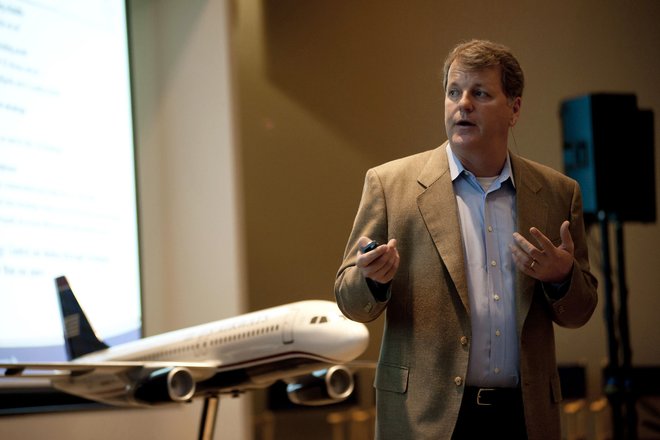
But don’t celebrate too soon. The long-term trend in aviation is consolidation. If United and American couldn’t merge, one or both may pursue smaller acquisitions—such as buying a regional carrier or investing in a startup like Avelo or Breeze Airways.
Strategic Alternatives to Full Merger With a full merger off the table, both airlines are likely to explore other paths to growth:
- Enhanced Joint Ventures: Expanding existing partnerships on transatlantic and Latin America routes to share revenue and costs without merging operations.
- Loyalty Program Monetization: Selling stakes in MileagePlus or AAdvantage to private equity firms, as Delta did with its SkyMiles program.
- Technology Sharing: Partnering on new booking systems, AI-driven customer service tools, or carbon tracking platforms.
- Slot Swaps at Congested Airports: Trading takeoff and landing rights at Reagan National or JFK to optimize route networks without regulatory headaches.
United has already begun moving in this direction. In 2023, it announced a $2 billion investment in its digital platform and launched new premium economy cabins across its long-haul fleet. American, meanwhile, is overhauling its customer service training and modernizing its Boeing 737 fleet.
A Defining Moment for Airline Leadership
Kirby’s decision to initiate talks—and then go public with them—was a calculated move. It signals bold, aggressive leadership. But it also exposes the limits of even the most powerful CEOs in a heavily regulated, labor-intensive industry.
“This wasn’t a vanity project,” Kirby said in a follow-up interview. “We’re obligated to explore every opportunity that could create long-term value. That includes asking hard questions—even if the answer is no.”
The transparency is unusual. Most airlines keep merger speculation tightly under wraps until a deal is imminent. By confirming the approach, Kirby positions United as forward-thinking, proactive, and unafraid of disruption.
Yet the rejection by American also underscores a critical truth: size isn’t everything. In an era where customer experience, reliability, and operational efficiency matter more than sheer scale, airlines may find that collaboration beats consolidation.
What’s Next for United and American?
Neither airline plans to slow down.
United is pushing forward with its “United Next” strategy, which includes:
- Fleet modernization with new Airbus A320neos and Boeing 787s
- Expansion into 50 new international routes by 2026
- Upgrades to 37 airport lounges
American is investing $15 billion over five years to:
- Refresh cabins across its entire fleet
- Enhance its mobile app and booking engine
- Improve on-time performance and customer service
Both recognize that winning in today’s aviation market isn’t about being the biggest—it’s about being the most trusted.
The merger talks may be over, but the competitive fire between United and American is far from extinguished.
Closing: Focus on Execution, Not Expansion
The failed merger attempt between United and American Airlines isn’t a sign of weakness—it’s a reality check. In a complex, regulated industry, even the most logical strategic moves can hit insurmountable walls.
For travelers, employees, and investors, the takeaway is clear: competition still matters. And for airline leaders, the path forward isn’t through acquisition, but through execution—better service, smarter networks, and genuine loyalty.
United’s outreach was bold. Its retreat was pragmatic. Now, both carriers must prove they can win not by merging, but by outperforming.
FAQ
Did American Airlines agree to talks with United? No. United initiated the conversation, but American Airlines leadership declined to pursue formal merger discussions.
Would a United-American merger have been legal? It would have faced extremely high antitrust scrutiny. Regulators would likely have blocked it due to excessive market concentration on key routes.
Who is the CEO of United Airlines? Scott Kirby has served as CEO of United Airlines since May 2020.
What are the biggest U.S. airlines by market share? As of the latest data, American Airlines leads in domestic market share, followed closely by Southwest, United, and Delta.
Could United merge with another airline instead? While no current talks are confirmed, United could explore partnerships or joint ventures with smaller carriers or international allies.
How do airline mergers affect frequent flyers? They can lead to expanded route networks and more redemption options, but often cause temporary confusion, mile devaluation, and reduced competition.
What happened to past major airline mergers in the U.S.? Notable mergers include Delta-Northwest (2008), United-Continental (2010), and American-US Airways (2013). All faced lengthy integrations but ultimately strengthened the surviving carriers.